
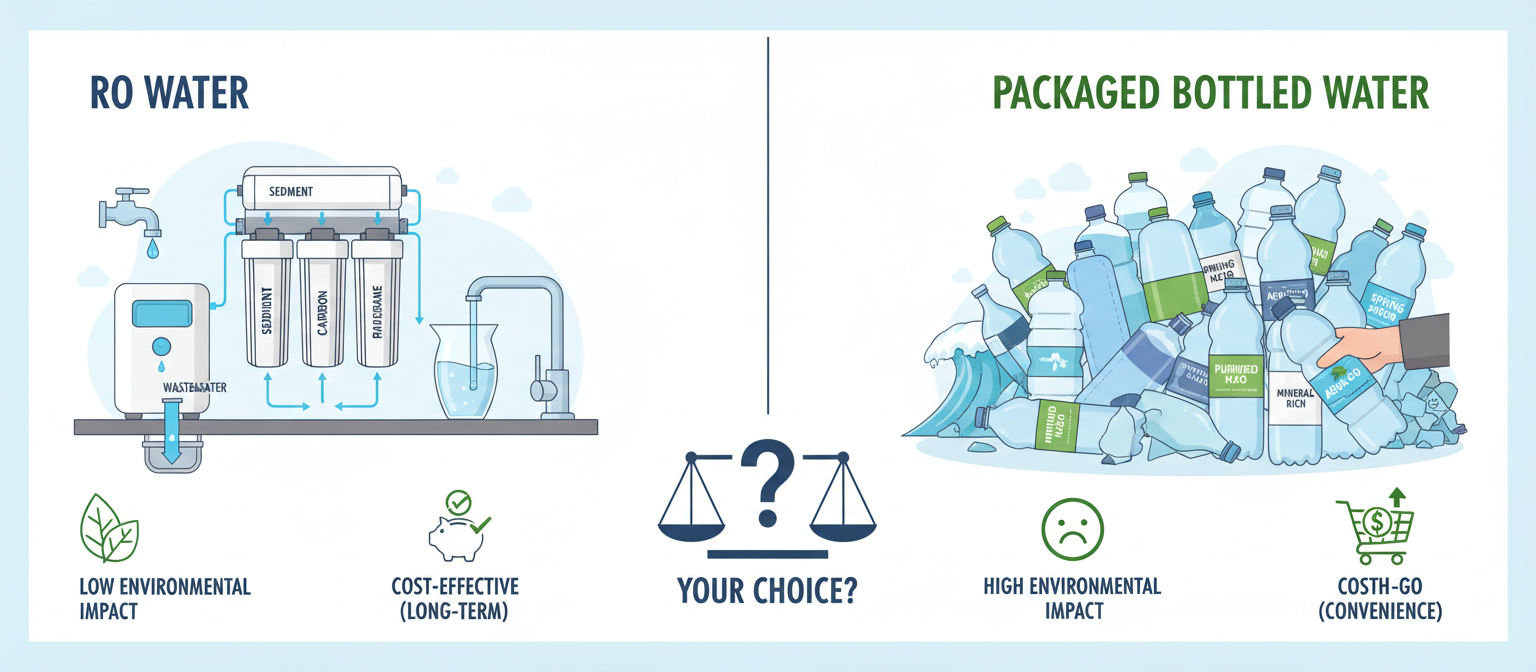
As we know every living-being need water and safe drinking water is essential for everyone, yet many households still get confusion whether choose RO purified water or packaged bottled water. Both options provide clean drinking water, but they are much differ in terms of purification process, safety, freshness, environmental impact, and long term consistency.
This article explains the differences clearly, without overstatement or fear based claims, so you can make an informed and practical decision for your family or workplace.
Understanding RO Water
RO (Reverse Osmosis) water is produced using a multi-stage purification system that typically includes RO membranes, sediment filters, activated carbon filters, and sometimes UV or UF stages.
The RO membrane removes:
- Dissolved salts (high TDS)
- Heavy metals such as lead, arsenic, and mercury
- Chemical residues
- Microorganisms and fine impurities
- Modern Home RO Water Purifiers are designed to treat water at the point of use, meaning water is purified just before consumption. Many systems also include mineral balancing to maintain taste and nutritional value.
- RO purification is especially effective in regions where water sources include borewell, tanker, or mixed supply, which often contain high TDS levels.
Understanding Packaged Bottled Water
Locally, We observe many packaged bottled water that has been treated(Purified) at a place, packaged, sealed, and distributed through commercial supply chains to every corner. It is regulated under food safety standards and is generally considered safe when sourced from reliable brands.
However, bottled water:
- Is purified at a central facility, not at the point of consumption
- Can be stored for long periods before use
- Is subject to handling, transportation, and storage conditions
While bottled water offers convenience, its quality may vary depending on storage duration, exposure to heat, and packaging conditions.
Safety Comparison: RO Water vs Bottled Water
- Freshness and Control
RO water is purified on demand, ensuring freshness every time you drink it. Bottled water, on the other hand, may remain stored for weeks or months before consumption.
With an RO purifier, users have full control over:
- Source water
- Filter maintenance
- Purification stages
This transparency supports consistent water quality.
2. Purification Transparency
RO systems follow a visible, traceable purification process. Filters can be checked and replaced at scheduled intervals.
Packaged water users rely entirely on the manufacturer’s process, with no visibility into:
- When the water was actually purified
- How it was stored before reaching the consumer
Both can be safe, but RO water provides greater user-level assurance.
3. Suitability for Daily Use
For regular household consumption, RO water is more practical and scalable. Bottled water is often better suited for:
- Travel
- Emergency situations
- Short-term needs
Using bottled water daily may not be economical or environmentally sustainable in the long run.
4. Environmental Considerations
RO water systems significantly reduce plastic waste compared to packaged bottles. Bottled water contributes to plastic consumption and disposal challenges, even when recycling systems are present.
From a sustainability perspective, RO water has a lower environmental footprint over time.
5. Cost Over Time
Although bottled water appears convenient, regular purchases add up. RO systems involve:
- One-time installation cost
- Periodic filter servicing
Over extended use, RO water generally proves more cost-efficient for families and offices.
Which Option Is Safer?
Both RO water and packaged bottled water can be safe when managed properly. However, for long-term daily consumption, RO water offers:
- Greater freshness
- Better user control
- Consistent purification
- Reduced plastic dependency
A greatly maintained RO system gives consistent drinking water according to our water standards and the needs of the household.
Final Perspective
While selection between RO water and packaged bottled water is not about fear or superiority—it’s about practicality, transparency, and sustainability.
For homes and workplaces required a dependable daily solution, an RO water purifier provide consistent safety and control. Bottled water remains useful in limited or temporary scenarios but may not be ideal as a permanent solution.
Understanding your water source, usage pattern, and maintenance capability is key to making the right choice.