
Clean and safe drinking water is requirement for daily health and hygiene. However, in many regions, households dependent on water sources that may contain imbalanced Total Dissolved Solids (TDS), residual chlorine, sediments, or other impurities. One important point to understand is that water does not always look contaminated. Even clear looking water can sometimes contain elements that affect quality over time.
This guide explains common signs that may indicate drinking water quality issues, how they can influence everyday wellbeing, and why many households consider water purification solutions based on their local water conditions.
1. Unusual Smell in Drinking Water
A noticeable or unpleasant odor can sometimes indicate changes in water quality. Common smells include:
- Sulfur or rotten-egg smell: May be linked to hydrogen sulfide in certain water sources
- Chlorine-like odor: Can occur due to excess disinfectants in treated water
- Metallic smell: May indicate dissolved metals such as iron or manganese
While such odors are not always immediately harmful, they often signal that water quality may not be ideal for regular consumption.
2. Unusual or Bitter Taste
Most times, drinking water has neutral or mild taste. However, if your water which you drink is tasting salty, bitter, sour, or metallic, it might be due to the presence of higher TDS levels or unbalanced minerals. In some cases, this is going to be a drinking issue or a digestive problem.
Water treatment methods such as filtration or reverse osmosis are commonly used to improve taste by reducing certain dissolved solids, depending on the source water.
3. Cloudy or Turbid Appearance
Although clear water is not always a guarantee of purity, visible cloudiness can indicate suspended particles or sediments. Signs include:
- Murky or foggy appearance
- Floating particles
- Residue left on containers after standing
This kind of situation might indicate that some solid particles are still there or that bacteria have multiplied, and that is the reason why many families choose to drink treated water every day.
4. Frequent Digestive or Skin Discomfort
In some cases, households notice recurring issues such as mild digestive discomfort, skin irritation, or increased sensitivity. While these symptoms can have multiple causes, drinking water quality is one factor often considered when such issues occur regularly.
Using properly treated water may help reduce exposure to certain impurities that can contribute to these concerns.
5. Scaling on Utensils and Appliances
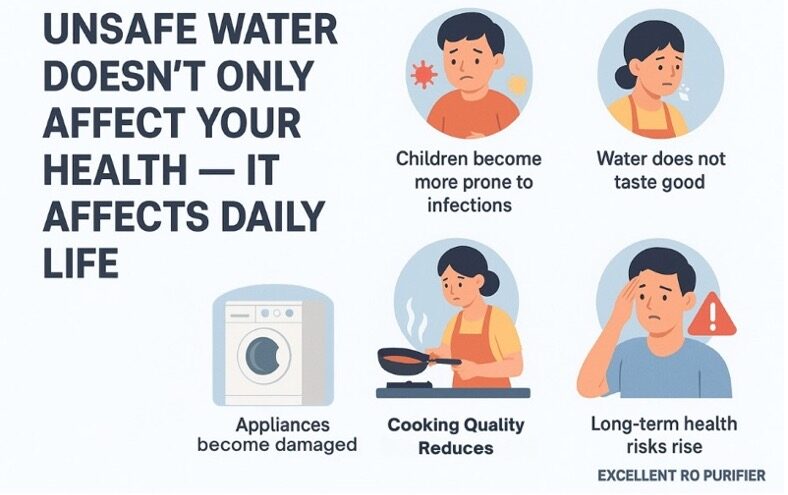
White or chalky deposits on kettles, utensils, geysers, or taps often indicate hard water or elevated mineral content. Over time, this scaling can affect appliances and plumbing efficiency.
Although minerals like calcium and magnesium are naturally occurring, excessive levels may prompt households to explore water treatment options to improve usability.
6. Discoloration or Visible Particles
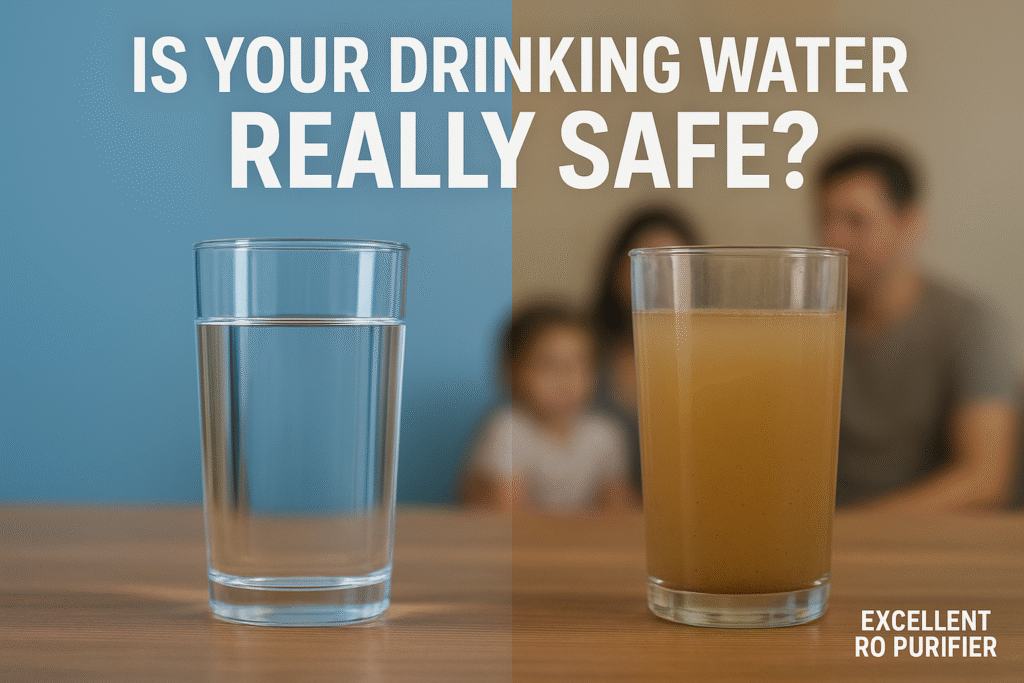
Water that appears yellowish, brown, or contains visible dirt may be influenced by pipeline corrosion, storage tank contamination, or borewell sediment. These particles can affect water clarity and overall quality.
Multi-stage filtration systems are commonly used to reduce visible impurities and improve clarity.
7. Metallic Taste or Plumbing Corrosion
Older or corroded pipelines can release rust or metallic particles into the water supply. This may result in discolored water or a metallic taste, making water less suitable for drinking without treatment.
Sediment and carbon filtration are often used to address such concerns.
Why Many Homes Use Water Purification Systems
Water quality can vary significantly depending on location and source. As a result, many households use water purification systems such as RO or UV-based purifiers to support consistent water quality.
A suitable purifier, chosen according to local water conditions, may help:
- Reduce excess dissolved solids
- Improve taste and odor
- Lower exposure to certain contaminants
- Provide more consistent drinking water quality
Conclusion: Staying Aware of Drinking Water Quality
Changes in smell, taste, appearance, or scaling patterns can offer useful clues about drinking water quality. Being aware of these signs allows households to take timely steps, such as testing water or considering appropriate treatment solutions.
Ensuring access to clean drinking water is a long-term investment in daily comfort and wellbeing.
Disclaimer: This content is intended for informational purposes only and does not constitute medical or professional water-quality advice. Water quality and health effects may vary based on location, source, and individual conditions. For specific concerns, consult a certified water testing professional or healthcare expert.
[…] Signs That Your Drinking Water Is Unsafe – A Complete Guide for Every Home Simple Tricks to Use Your RO Purifier More Efficiently Understanding TDS in Water – Safe Levels Explained […]